
No small beer
When the story of the sale of independent brewer Innis & Gunn in a pre-pack administration to C&C Group landed in my in-tray recently, it was a surprise to say the least. It came while the drinks industry was still very much digesting the sale of BrewDog to US-based Tilray.

In reality, I had long written off my investment in BrewDog – which was made in two fundraising rounds in 2011 and 2013 – because the major shareholder, TSG, was owed such a significant sum that all other shareholders (me and the 220,000 other “Equity Punks”) would invariably be wiped out following an acquisition.
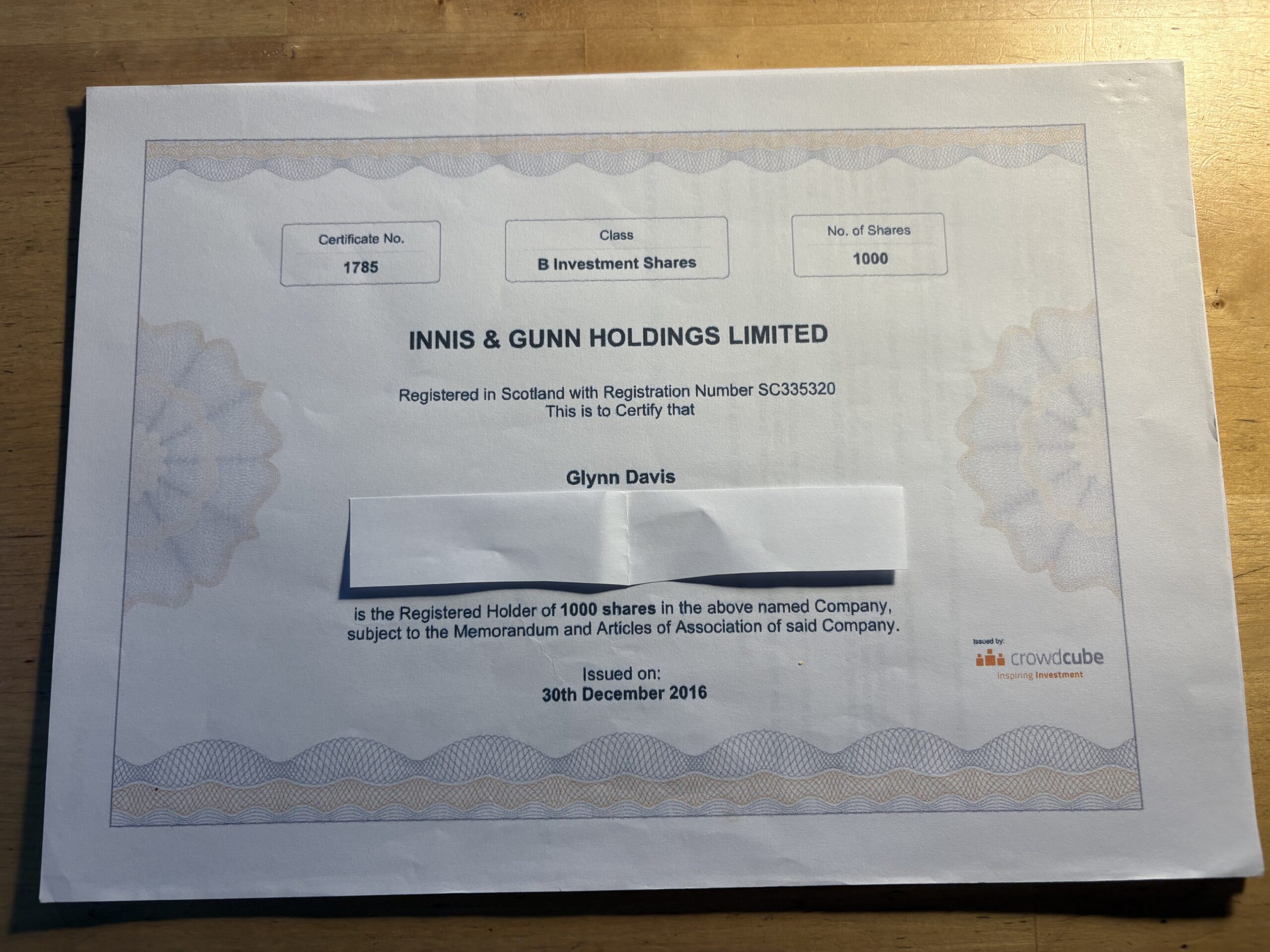
I was, however, a little more comfortable about the prospects of fellow Scottish brewer Innis & Gunn, which had seemingly been going along fine – with its three taprooms, brewery and listings in various retailers – judging by the communications received as a shareholder.
Its surprise sale for a mere £4.5m to C&C represents a serious climbdown from the £150m valuation it achieved when it raised £3.3m from more than 2,400 investors in a crowdfunding deal in 2020. But even this pales when compared with the £33m BrewDog was sold for versus the £2bn valuation it supposedly attained when it was last touting for money from equity punks through its myriad crowdfunding rounds.
Investing in beer-related ventures via crowdfunding has been a rather sobering experience for me personally. My record has been Innis & Gunn 100% loss, BrewDog 100% loss, Wild Beer Co 100% loss, West Berkshire Brewery 100% loss, The Bottle Shop 100% loss, and then, drum roll please, Camden Town Brewery achieved a 65% gain for me and other investors when in December 2015 it was sold to AB InBev.
I’d be the first to admit it doesn’t look great, but I’d like to add that I’m not a total rank amateur investor. I spent almost a decade working in fund management in the City of London for major UK and US banks, and my friends will vouch for the fact I never leave the house without a copy of the Financial Times tucked under my arm.
Part of the problem with much of the crowdfunding that has taken place in the food and drink sectors is that it has not really been seen as a proper investment by the stakeholders involved. The limited due diligence required by the crowdfunding platforms encouraged companies to issue shares at the most ludicrous valuations. And many buyers of these shares regarded them as nothing more than a loyalty-type arrangement that provides discounted beers and other perks.
This scenario can be seen in the letter BrewDog sent to me and other equity punks after the Tilray sale. “We would love to continue our relationship with this incredible community – to treat you as ambassadors for the brand and to honour the spirit of Equity for Punks. We intend to continue your key benefits, including bar and online discounts, tattoo discounts, and a free beer on your birthday.” Great, thanks.
This is all well and good, but not every investor was in it wholly for the perks – myself included – and the reality is that crowdfunding has been like the Wild West. As well as the Willy Wonka valuations, the way the crowdfunded (easy) money has been spent has been highly questionable. All too often, it was used as merely working capital rather than the promised investment in new pubs and taprooms.
I’m not overlooking the fact there have absolutely been many tough challenges faced by the sector over recent years, but there have also been some questionable management practices/decisions in evidence too. This is probably why many businesses returned multiple times to the crowdfunding well and each time diluted down existing shareholders.
On top of this, the supposed equity that companies have issued has invariably been of a variation with fewer rights than the full-fat equity owned by the founders. Even if BrewDog and Innis & Gunn had been sold for even half-decent sums, we rights-lite investors would have been right at the back of the queue during any payday.
So, what exactly have I learned from investing in crowdfunding businesses? It’s been a very clear lesson. I’d never do it again, unless it was for only modest sums that deliver a good return on investment on a philanthropic basis and the perks offered. I’ve recently stuck a very modest sum in Lost Cause Brewing Co because I wanted to help co-founder Colin Stronge, who is one of the best brewers in the country, build a new brewery, and I’ll hopefully get a chunk of my money back in free beer.
Yes, I understand that investing in any business has a flashing “buyer beware” sign above it. But like many other people, it feels like my crowdfunding commitments have merely contributed to elongating the life span of over-promising businesses in an over-supplied sector. The result has been that some individuals have made out like bandits while many suppliers have been forced to the edge by hefty unpaid bills – and a whole group of people have ultimately lost their jobs.
Glynn Davis, editor, Beer Insider
This piece was originally published on Propel Info where Glynn Davis writes a regular Friday opinion piece. Beer Insider would like to thank Propel for allowing the reproduction of this column.