Philanthropy and pubs
King’s Cross’ ongoing multibillion-pound transformation has resulted in the widespread gentrification of the area and the opening of many smart new eating and dining establishments, welcoming a more moneyed clientele. But for something a little grittier and grounded in reality, I’d frequently eschew the glitz of the newer places and instead relax in the undemanding requirements of Irish pub McGlynn’s, which stands almost in the shadow of that gothic marvel, the St Pancras Hotel.
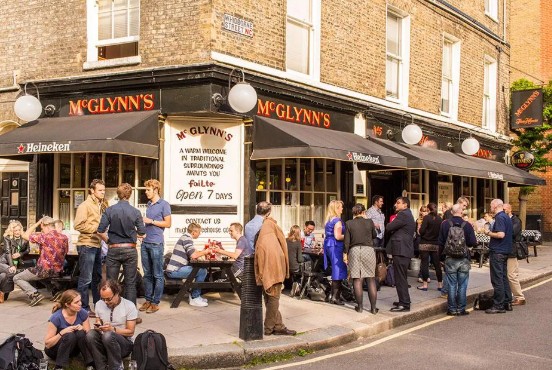
Over the 20-plus years I’ve been visiting McGlynn’s, it was always something of an oasis of calm away from the melee near the mainline stations, and during the working week, it largely catered to construction workers from the north of England, who would disappear to their families at the weekends. In recent years, its inclusive, welcome-all approach had contributed to it becoming rather popular, especially among younger workers in the new offices around King’s Cross who wanted the warmth of a traditional pub. A hidden gem, no less.
However, the place was then suddenly boarded-up in late-2023 following the death of long-time licensee Gerry Dolan, and a price tag of £3.2m placed on the pub, which led to grave concerns that its days were over and that it would be swept-up as part of the area’s redevelopment.
But then in early 2025, it was announced it had been bought by renowned artist Peter Doig, who owns a gallery opposite and who supposedly once lived on the nearby estate. The plan is to continue running it as a pub, and importantly, to keep the traditional style that had attracted customers during Dolan’s 40-year custodianship.
It’s a positive story, but also a sad one in a way, because it seems that in a growing number of cases, local pubs are only being saved because they are fortunate enough to have benefactors with deep pockets who do not wish to see them lose their valuable place in their local communities. There’s a whole new level of philanthropy taking place around pubs, which is good, but arguably, we shouldn’t really be in this place.
Lady Loretta Rothschild rescued her local, the Seven Stars Inn in Bottlesford, Wiltshire; H&M’s major shareholder, Stefan Persson, owns the Bell Inn in Ramsbury; former Blackstone financier Chad Pike bought the Three Daggers in Edington; and Michel de Carvalho-Heineken and his wife rescued the Woolpack Inn in Totford with a view to it retaining its community relevance.
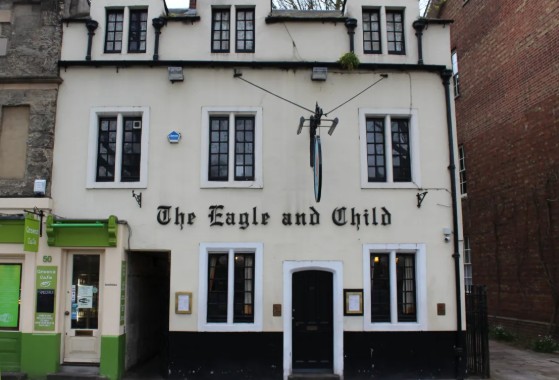
Meanwhile, technology billionaire Larry Ellison’s Ellison Institute of Technology bought the historic Eagle and Child pub in Oxford after it closed in 2020 and was facing a doubtful future. The grade II-listed pub is famous for hosting the Inklings literary group, which included JRR Tolkien and CS Lewis, and is currently undergoing major works to save the structure and will reopen next year.
It was for similarly philanthropic-type reasons that art dealer and collector Ivor Braka bought The Gunton Arms in Norfolk and the nearby Suffield Arms. He states: “A pub provides a vital stage for social intercourse, which has been lost in an age of increasingly virtual contacts. Social media is anathema to me. In a pub, you can stave off social isolation and loneliness, particularly in rural areas.”
It seems that a growing number of people are coming to the sensible conclusion that pubs are manifestly more than vehicles to sell alcohol, and some of these individuals are in the fortunate position of being able to support their belief in the community value of pubs through money. Sadly, all too many pubs are not in anything like such an exalted position and are little more than an unloved asset on a balance sheet, with a financial value attached to it that would be bigger if it were redeveloped as flats or anything other than a pub.
Glynn Davis, editor, Beer Insider
This piece was originally published on Propel Info where Glynn Davis writes a regular Friday opinion piece. Beer Insider would like to thank Propel for allowing the reproduction of this column.