
Standing up to standing up
After many years of intending to visit The Auld Shillelagh pub in Stoke Newington, I finally made it along for a pint of its revered Guinness. During my visit an Irishman walked in and ordered a double whiskey and then proceeded to knock it back in one go before heading straight out the door. The whole procedure lasting no more than two minutes max.
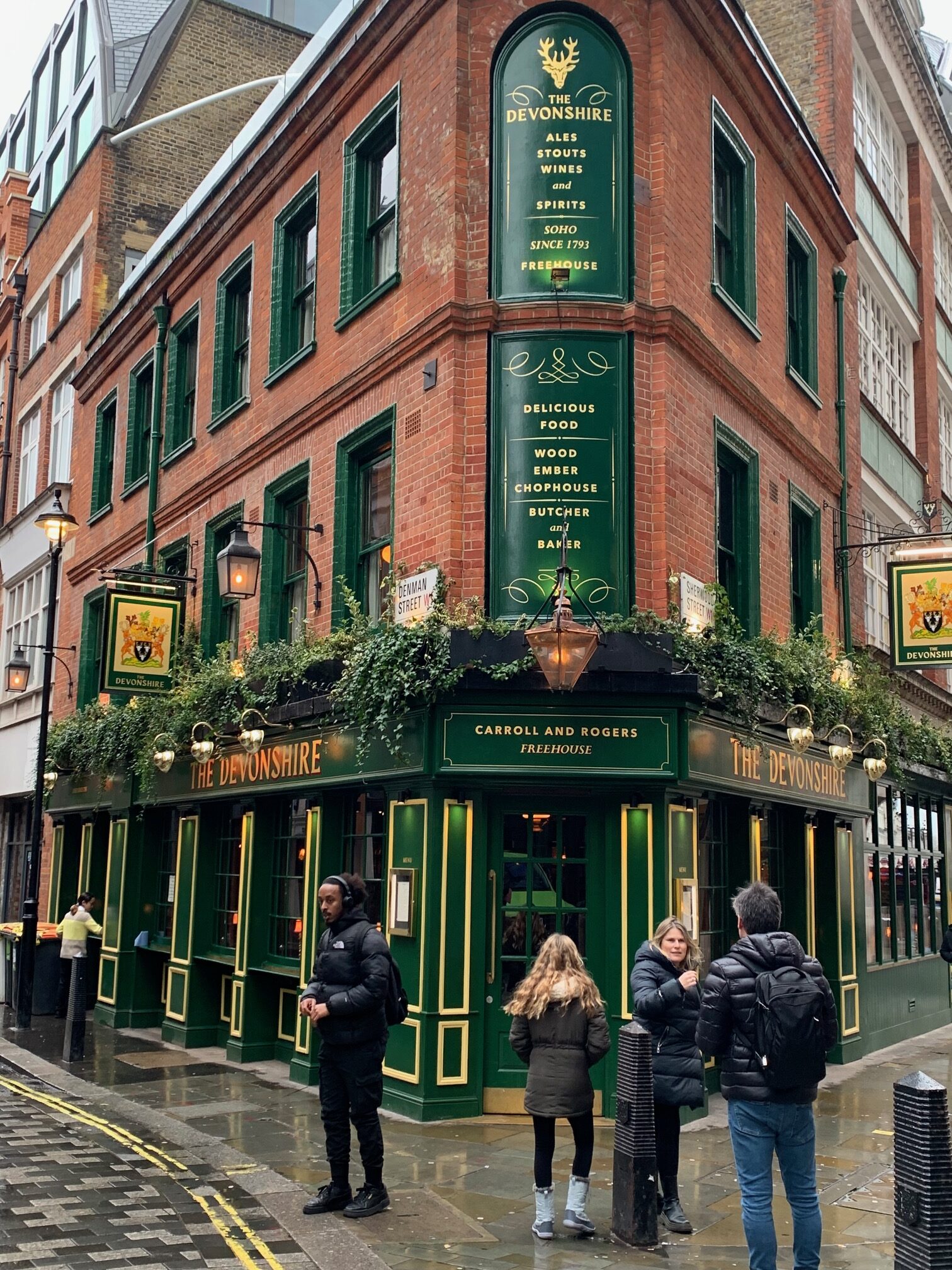
This had me thinking about the current rumpus involving Westminster Council and the incredibly widely reported news of its move to limit so-called vertical drinking. The two-minute-stay Irishman would have been scuppered if he’d had to sit down and wait for table service.
The whole debate got increasingly political, very quickly. In the blue corner is the council defending itself by stating it is all old news and that it’s been wholly misunderstood and misreported while in the red corner is the mayor of London, Sir Sadiq Khan, condemning the council for even considering new legislation – on both vertical drinking and a policy of initially refusing new licensing applications.
Much of the action revolves around Soho (and its cumulative impact zone – aka busy food and beverage area) where drinkers traditionally spill out of the pubs and on to the streets enjoying their vertical drinking and contributing to the area’s world-renowned buzz. What I’d not appreciated until this whole affair blew up was just how many other people are like me and most enjoy visiting pubs when they can stand up and mill around the bar area or venture out on to the pavement with pint-in-hand.
While Westminster Council appears to not be suggesting a ban on vertical drinking, it is guilty of very gradually over the years sucking the life out of the hospitality offering in Soho and the surrounding areas of the West End. Every generation moans that Soho is not like it was and although I’d suggest nothing is ever really like it was, the once-infamous area has undoubtedly changed. I briefly lived in Soho in the mid-1990s, and it is in many ways a very different, much more sanitised, version of its former self.
Some of the people who were no doubt in Soho with me at that time are still there. My guess is that a few of them will likely be members of The Soho Society. I’ve been a member of this group and attended various events and they are an oddball bunch for sure. But that’s fine, it’s what Soho is all about. However, many of them should probably have moved out of the area years ago. Dare I say it, they are at an age where the noise and racket of Soho at night is more of a negative than a positive as it was when they were young and first moved into the area to live in the thick of the noisy action.
The issue here is that The Soho Society and its NIMBY member/residents of the area have been wielding too much power when it comes to licensing. This has contributed to the council’s all too gung-ho demonisation of hospitality and its meddling with how such businesses are run.
It was interesting to read in The Londoner publication the lengths that Oisin Rogers and Charlie Carroll of The Devonshire have apparently had to go to get approval for a licence to operate a pub in the former The Lady building in Covent Garden. It reports that there will be no vertical drinking permitted outside the venue and strict limits on the number of people allowed inside as well as how many can be standing at any one time. It sounds like it will be more like a restaurant than a pub. Is that the way the owners would like it to be? I’ve not heard back from them, but I suspect I know the answer already.
The Lady pub is just one of 75 venues in Westminster since 2011 that have either had total bans or restrictions of some sort placed on allowing people to drink outside, according to the Soho Business Alliance. And major West End landlord Shaftesbury Capital acknowledges it has lost 3,700 square metres of vertical drinking space since 2006.
Chris Wright, member of the Soho Business Alliance, put this whole dire situation rather succinctly: “Westminster [Council] should carefully consider whether it is appropriate for licensing policy to dictate how consumers consume hospitality services rather than focusing on actual evidence of nuisance, crime or disorder. There is a real risk that policies intended to manage local impacts could unintentionally undermine the economic viability of businesses that are already under significant pressure. The debate should not be about whether customers are sitting or standing. It should be about supporting responsible operators, protecting residents and ensuring regulation remains proportionate, evidence-based and economically realistic.”
Let’s hope all parties see sense and Irishmen in the future with a great thirst and little time on their hands can continue to walk into pubs in Central London and be asked what they’d like to drink rather than what table they would like to sit at.
Glynn Davis, editor, Beer Insider
This piece was originally published on Propel Info where Glynn Davis writes a regular Friday opinion piece. Beer Insider would like to thank Propel for allowing the reproduction of this column.