
Can food help slow the rate of pub closures
Long-standing conventional practice has been for restaurateurs to open in pubs primarily because the economics have been favourable compared with opening dedicated restaurants. This drove the trend for gastropubs that have proliferated since they came about in the early 1990s, with the acknowledged pioneer in the field, The Eagle in London’s Farringdon Road, creating the template.
Such has been the success and seismic impact on hospitality of the format over the years – combining top food with relaxed pub vibes – that we are now seeing a growing number of restaurateurs and food-led operators actually looking to create new, bespoke, pubs within which their dining rooms can feature prominently. These are new pubs created to house the ideal dining environment – with the optimum number of covers and well-appointed kitchen space – rather than a shoehorning of a restaurant into an existing but possibly ill-suited Victorian pub layout.
On the runway is The Poet in Farringdon, which involves the team behind Hackney restaurant Sune opening a pub at the end of November within a historic building next to Smithfield Meat Market. They have described it as a “pub first and foremost honouring everything we love about a great traditional boozer”. It will run across multiple levels, with the ground floor pub and upstairs dining room opening first, followed by a ten-seat chef’s table and an attic cocktail bar scheduled to open their doors in 2027.
This extensive venue will be joined by the Hero’s Return in London’s Battersea on the riverside. It is being created by the team behind the pasta restaurant group Bancone in partnership with Splendid Hospitality Investments and is being led by David Ramsey from Bancone, Crust Bros and Grosvenor Pubs, alongside culinary director Jonathan Woolway, who is executive chef and co-owner of the Shed in Swansea.
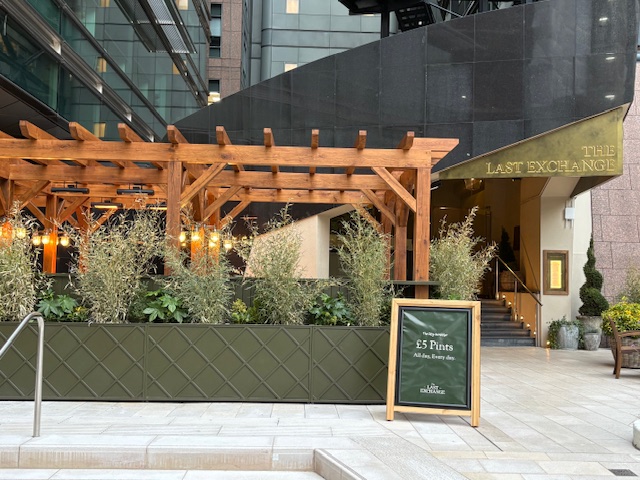
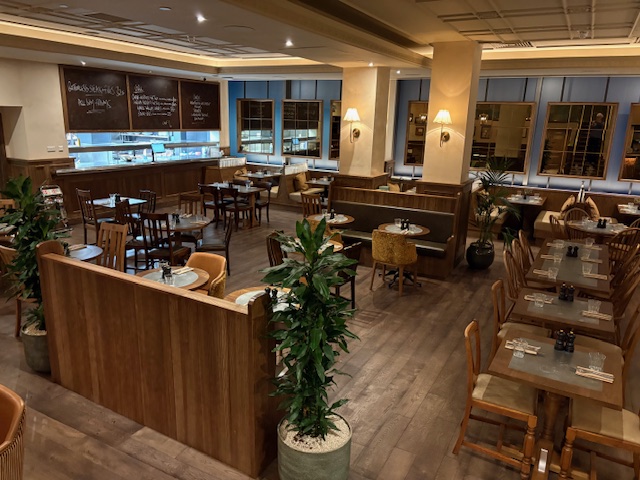
We have also had the recent opening of The Last Exchange in Liverpool Street’s Exchange Square, which is the first pub from the newly-formed The Publican Estate. It is part of Individual Restaurants and is an extensive 238-cover venue that was previously one of the group’s Piccolino restaurants. It’s a smart move, because having seen the unsuitability of the location for a restaurant, it has been able to pivot to operating a pub with the major advantage that it already has the configuration of a seriously large dining area and a chunky open kitchen to service the space.
During my recent visit, I found a smart fit-out and a flavoursome house lager for a bargain £5 (this is the City of London), which added to its appeal and pushes through its “pubiness”. I’m informed the Guinness is flying out of the pumps. There are clearly plans to open more of these food-led pubs as the group recognises the appeal of the traditional pub environment – over pure restaurants – but with a serious food offering.
Another new purpose-built pub is The Tallyman on the site of a former post office in Canary Wharf, which food-led operators Hoste recently opened. The team is well experienced in restaurants and has also certainly earned its pub chops with venues like The Somers Town Coffee House and Faber restaurant.
The team is not finished there though because it has another new pub on the way, with the planned Tribeca Storehouse that will be built near King’s Cross in the summer of 2027, as part of a broader hospitality offering in a new development comprising the pub, chop house and club house.
This raft of new restaurateur-owned pubs is refreshing when set against the ongoing negative press for the category. Recently, we had “pubs are closing at the rate of one a day” screaming from the headlines when the British Beer & Pub Association released its latest figures that calculates around 360 pubs will have permanently closed their doors by the end of 2026.
For anyone who genuinely loves pubs and recognises that, among other things, they employ lots of people in their local community (especially entry-level roles), this is extremely shocking. While these new pubs will not offset the closure rates, they do at least reflect seasoned food operators committing serious investment into new developments that are not smart restaurants, but pubs configured for today’s market, with food integral. These are real endorsements for the much-maligned great British boozer. Maybe one day soon we’ll be reading a headline along the lines of “pubs are opening at a rate of….”
Glynn Davis, editor, Beer Insider
This piece was originally published on Propel Info where Glynn Davis writes a regular Friday opinion piece. Beer Insider would like to thank Propel for allowing the reproduction of this column.